Service
System integration and business process automation
Less retyping and manual work, with scope, timeline and price fixed before development starts.
No obligation · 45 minutes · written feedback
São Paulo, Brazil
- Scope, timeline and price fixed before development
- Working software every 2 weeks
- You decide before paying anything
- Your company owns the code, by contract
It's a good fit when…
- The same information gets typed into more than one system, every day.
- Online store orders don't make it into your management system (ERP) on their own.
- Incoming payments are checked one by one, by hand, before they're marked as paid in finance.
- Your team answers the same questions on WhatsApp all day long.
- Sales and finance come up with different numbers for the same month.
Sound familiar?Request a free assessment
Examples of what we can build
The systems you already use, connected
Your ERP and your online store, for example: orders, inventory and invoices flow from one to the other without retyping, through an See what this term meansAPI: the connection point a system offers so other systems can exchange information with it. or webhooks (automatic notifications between systems); when a system has no API, sometimes through file exchange.
Payment gateways
Billing, payment confirmation and reconciliation in your finance system, with no manual checking.
Marketing tools and CRM
Contacts and sales kept in sync between your CRM and your marketing tools.
Automating repetitive tasks
Reports, data entry, alerts and checks that someone does by hand today, running on their own.
Chatbots for customer service, sales or internal use
Answers to the questions that keep coming up, on your website or on WhatsApp, handing off to a person when needed.
AI for automation and data analysis
Sorting orders, reading documents or summarizing data, so your team has the information ready when it's time to decide.
Sensors and equipment connected to your system
Machines, sensors and devices sending data to a dashboard or an app, as in real-time production counting.
Don't see what you need here?Request a free assessment
How integration projects work
Free · 45 minutes
Which systems you use, what gets typed in twice and where manual work hurts.
Free · when needed
A prioritized scope of the data each system exchanges, and a plan with a fixed timeline and price.
Working software every 2 weeks
Every 2 weeks, a working part of the integration that your team can already use.
Support and continuous improvement
Ongoing
If you want, we adjust the integration whenever one of the systems changes.
Prioritized scope: the list of what the software will do, in order, showing what comes first and what waits until later.
What gets pinned down before development
- Which systems are included and what each one allows
- Which way the data flows, and how often
- What happens when one side fails
- Where the integration runs and who can access the data
Where you make the call
You don't commit to the whole project blind: no paid stage starts without your go-ahead.
With the written feedback in hand, you decide whether to go ahead. The Discovery Sprint, when it's needed, is free.
With the timeline and price fixed in the plan, you decide whether to move into development.
What drives the price of an integration
Number of systems
Each additional system is one more connection to build, test and maintain.
Whether the systems have an API
An API is how a system lets other software connect to it. Without one, the connection has to take another route, and that takes more work.
Data volume and frequency
A once-a-day update is simpler than syncing each order as it happens. More volume adds work, too.
Rules for converting data between systems
Product codes, taxes and statuses in different formats need rules to translate between systems.
Error handling and retries
If a system goes down, the integration has to hold on to what didn't go through and resend it later, without duplicating the order.
Sync status dashboard
A screen showing what was synced, what failed and what was resent. That screen gets built too.
We look at how each of these applies to your project, then fix the timeline and price before development starts, without charging anything until then.
How much custom software costs, and what drives the price
You don't need any of this figured out to talk to us:Request a free assessment
Our integration projects
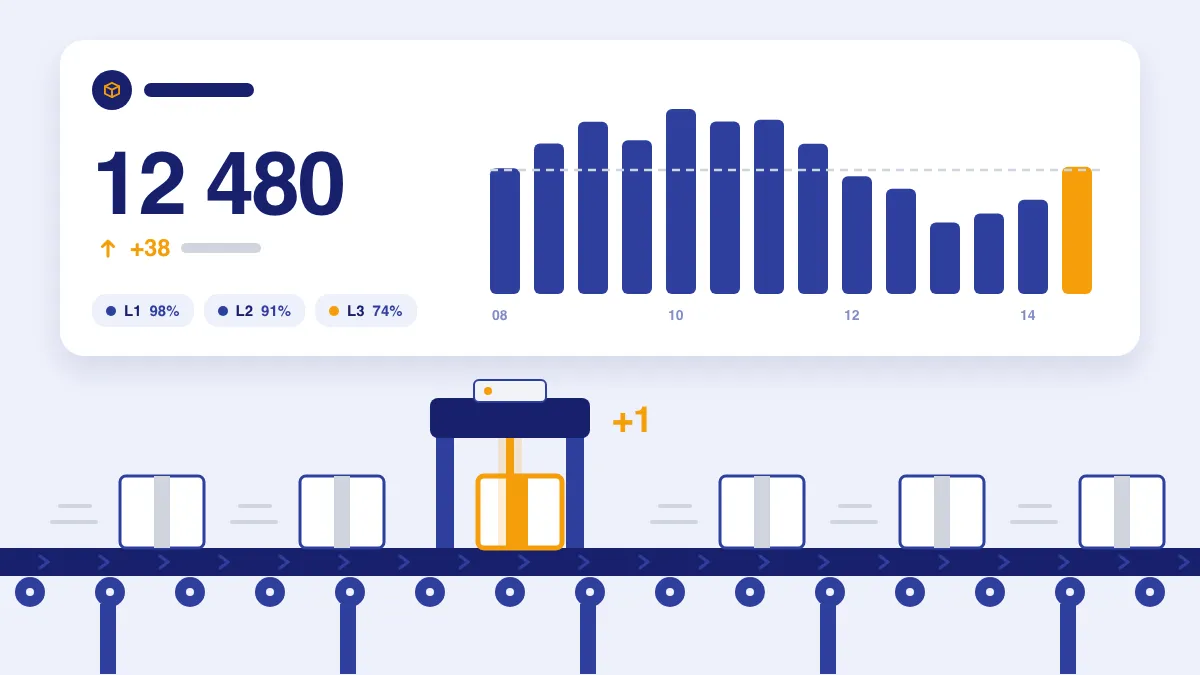
Manufactured items counted in real time, with line metrics on a dashboard
The problemA manufacturer needed to know in real time how many items its line produced and to track industrial metrics.Services:Web applicationsIntegrations and automationRead the case study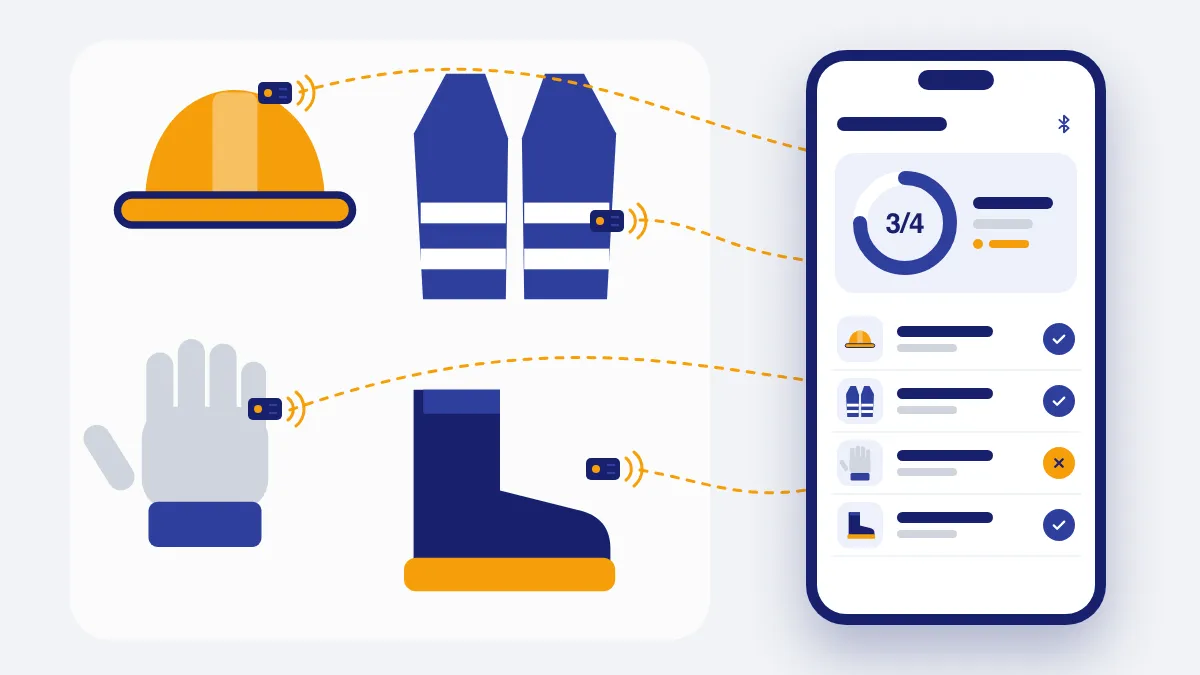
Monitoring and validating that workers use their PPE correctly, with sensors on the equipment itself
The problemA large energy company needed to know whether workers were using their personal protective equipment (PPE) correctly, meaning the safety gear each person wears on the job. That required monitoring how the equipment was used and validating that the use was correct.Services:Integrations and automationMobile appsRead the case study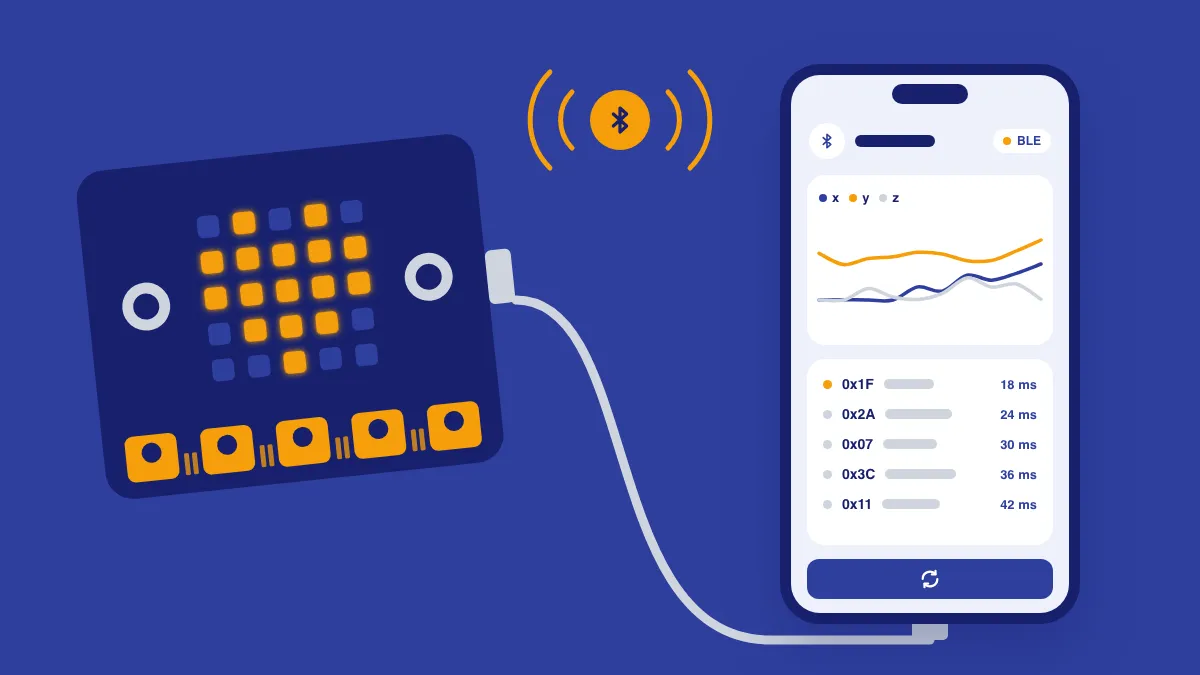
An app that lets the Micro:bit board exchange data with Android devices, by cable or over Bluetooth
The problemA large education company needed the Micro:bit board and Android devices to communicate and transfer data between them. The link had to work in two ways: over a MicroUSB cable and wirelessly, over Bluetooth Low Energy (BLE), the version of Bluetooth designed to use little power.Services:Integrations and automationMobile appsRead the case study
Questions about integration projects
Can you integrate with the system I already use?
It depends on what that system allows. If it has an API (the built-in way a system lets other software connect to it), the integration is usually simpler; without one, there's sometimes another route, such as exchanging files between the systems. Bring the names of your systems to the free assessment: what each one allows is confirmed before scope, timeline and price are fixed.
Do I need a technical background to hire you?
No. You describe the problem in plain business terms, and together we turn it into a prioritized scope: what comes first and what can wait.
Do you sign NDAs? And who has access to the data in my systems?
Yes. If the project calls for confidentiality, we sign a non-disclosure agreement (NDA) before you share the details. Just ask on WhatsApp or by email at comercial@lemamon.dev. What access the integration needs, where it runs and who sees the data are all defined with you before scope, timeline and price are fixed.
Should I integrate or switch systems?
If your current system handles most of the work, integrating usually costs less than replacing it. When it's holding your operations back, switching may be the better investment. The free assessment is there to help you make that call.
How much does system integration cost?
It depends on how many systems are involved, what each one allows and whether data moves once a day or with every order. The price of your integration is fixed before development starts, once each connection is confirmed. If you already have a budget in mind, tell us in the assessment.
Do I pay anything before development?
No. The assessment and, when it's needed, the Discovery Sprint are free. The paid stages are development, with the scope, timeline and price fixed before it starts, and ongoing support, if you want it.
How long does a system integration take?
The timeline is fixed before development starts, along with the price, once we've confirmed what each system allows. If there's a deadline, such as switching to a new system, bring it up in the assessment. The deadline goes into the plan.
How do I know the project won't stall halfway through?
Projects usually stall when the budget runs out before the software is ready, or when nobody sees anything working until the end. Here, scope, timeline and price are fixed before development starts, and every 2 weeks you get a working piece: if something goes off track, you notice early, not just at the end. And the code built for the project belongs to your company, by contract: if you ever need to move to another vendor, it stays with you.
What if I need to change the scope mid-project?
You get working software every 2 weeks so you can spot early on what needs to change. If a change affects the scope, we agree on a revised scope, timeline and price with you before we continue.
Does my company own the code?
Yes. The code built for your project belongs to your company, and that's written into the contract. If you ever want to continue with another vendor, the code is in your hands.
Have a question that isn't answered here?
Ask us on WhatsAppOther services
- Web applications
Management systems, dashboards and portals built around how your company works.
- Mobile apps
Apps that let your customers or your team get things done on their phones.
- MVPs and digital products
The first version of your product in the hands of real users.
- Support and continuous improvement
Maintenance and improvement for the system after it goes live.
Tell us which systems need to connect
In 45 minutes, we map out with you where data gets retyped, and you get written feedback afterward.
Free, no obligation to hire us
Free assessment: lemamon.dev/en/quote
Prefer email?comercial@lemamon.dev
São Paulo, Brazil
You can also find Lemamon.dev on: